weddings · 29 March 2026 · 6 min read · Darius Setsoafia
What Does Cinematic Wedding Videography Actually Mean?
Every wedding videographer calls themselves cinematic. Here's what it should actually mean, and how to tell the difference between real cinematic quality and a marketing buzzword.

Everyone is “cinematic” now
Search for a wedding videographer in Newcastle - or anywhere - and every single one describes their work as “cinematic.” It’s become the default adjective for wedding videography, used so broadly that it’s lost all meaning.
The word originally meant something specific: wedding films that look and feel like cinema. Not a home video. Not a corporate training video. Something with the visual quality, emotional pacing, and sound design of a short film.
But when everyone uses the same word, it stops helping you choose. So here’s what cinematic wedding videography should actually mean, and how to tell whether a videographer’s work genuinely qualifies.
The five elements of cinematic wedding videography
1. Camera movement
Cinema doesn’t shake. Watch any film - Marvel, Wes Anderson, Christopher Nolan - and the camera either moves with deliberate, smooth purpose or holds perfectly still. It never wobbles.
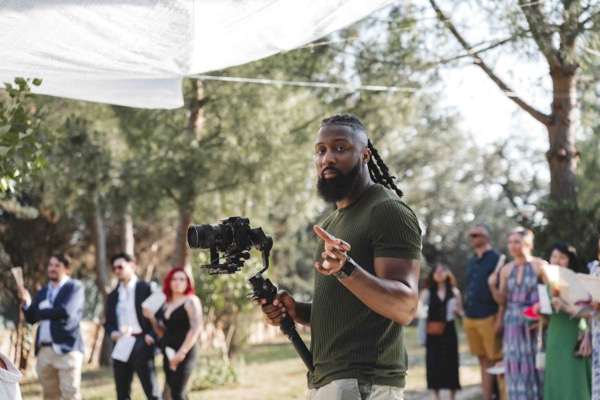
Cinematic wedding videography requires stabilisation. That means gimbal stabilisers for walking shots, sliders for controlled lateral movement, and a tripod for static shots. The camera should glide through spaces, not bounce through them.
How to spot it: Watch a videographer’s film on a big screen. If the footage makes you feel slightly seasick during walking shots, the camera work isn’t cinematic - it’s just handheld.
2. Lens choice and depth of field
The “cinematic look” that most people recognise - where the subject is sharp and the background is beautifully blurred - comes from lens choice. Specifically, it comes from fast prime lenses with wide apertures (f/1.4 to f/2.8).
These lenses do two things:
- They separate the subject from the background, drawing your eye to the person, not the fire exit sign behind them.
- They perform exceptionally in low light, which is critical for candlelit ceremonies, dimly lit reception rooms, and evening coverage.
A kit zoom lens (the one that comes with a camera) can’t achieve this. It produces flat, “everything in focus” footage that looks more like a news broadcast than a film.
How to spot it: Look at the background in their portfolio. Is it soft and creamy, or is every detail sharp from foreground to background? Cinematic films use depth of field to guide your eye.
3. Colour grading
Colour grading is the process of adjusting the colour, contrast, and tone of every shot to create a consistent visual style. It’s the difference between footage that looks like a phone video and footage that looks like a film.
Good colour grading is invisible - you don’t notice it, but you’d notice if it wasn’t there. It makes skin tones warm and natural, makes venues look as beautiful as they felt, and creates visual consistency across an entire day of footage shot in different lighting conditions.
What to look for:
- Consistency across the film - do indoor and outdoor shots feel like they belong together?
- Skin tones - do people look natural, or overly orange/green/pale?
- Contrast - is there depth to the image, or does it look flat?
Red flag: Heavy colour filters that make everything look the same colour (teal and orange, desaturated grey, heavy vintage). These are trends that date quickly. Good grading is subtle and timeless.
4. Sound design
This is where most “cinematic” wedding films fall apart. You can have beautiful footage, but if the audio is an afterthought, it’s not cinema.
Cinematic sound design for a wedding film means:
- Music selection: Licensed, high-quality music chosen to match the emotional arc of the day. Not trending TikTok audio. Not royalty-free library music that sounds like elevator background.
- Natural sound: The ambient sounds of your day layered underneath the music - laughter, applause, glasses clinking, the rustle of a dress. These small details make a film feel real.
- Clean dialogue: Your vows and speeches recorded with dedicated wireless microphones, mixed clearly so every word is audible even when music plays underneath.
- Audio transitions: Sound that bridges scenes smoothly - not abrupt cuts from one clip to the next.
How to check: Turn up the volume. Listen to speeches in their portfolio films. Can you hear every word? Is there background noise, echo, or wind? Good audio should sound effortless.
5. Editorial rhythm
Cinema has pacing. It breathes. It doesn’t rush through every moment at the same speed.
A cinematic wedding film should feel like it has chapters. The morning preparation is slow, intimate, quiet. The ceremony builds tension and delivers an emotional peak. The speeches bring warmth and laughter. The evening brings energy, movement, music.
The editing should match these rhythms. Slow, lingering shots during emotional moments. Faster cuts during the party. Moments of silence between the music where natural sound comes through.
Red flag: If a wedding film feels like a music video - wall-to-wall fast cuts synced to a beat with no breathing room - it might be impressive for 30 seconds, but it won’t make you feel your day. That’s editing for the videographer’s reel, not for you.
The difference between cinematic and documentary
These two approaches aren’t opposites - the best wedding films blend both. But understanding the distinction helps you communicate what you want.
Documentary approach: The videographer observes and captures. They don’t direct, pose, or intervene. The film is made from what happens naturally. It’s authentic but relies heavily on the videographer’s instinct for being in the right place at the right time.
Cinematic approach: The videographer takes more creative control. They might set up specific shots, use dramatic lighting, or ask couples to walk through a location for a composed sequence. The film is more visually polished but can feel less spontaneous.
The blend: Most high-quality wedding videographers in Newcastle work somewhere in the middle. They film documentary-style for 95% of the day - capturing real moments as they happen - but take 5-10 minutes for composed cinematic shots during golden hour or in a beautiful location.
This gives you the best of both: authentic coverage of your day plus a few composed hero shots that make the highlight film sing.
How to evaluate a videographer’s cinematic claims
Next time a videographer tells you their work is “cinematic,” ask them:
- “What stabilisation do you use?” (Gimbal, slider, or handheld?)
- “What lenses do you shoot on?” (Prime lenses with wide apertures, or zoom lenses?)
- “How do you record audio for speeches?” (Wireless lapel mics, or camera mic?)
- “Where do you source your music?” (Licensed library like Musicbed/Artlist, or YouTube?)
- “Can I see two full-length films?” (Not a showreel - full wedding films)
Their answers will tell you whether “cinematic” is a description of their work or just a word on their website.
Our cinematic approach at DS Media
We film weddings across Newcastle upon Tyne and the North East with a documentary-first, cinematic-craft philosophy. That means we capture your day as it happens - no staging, no recreated moments, no asking you to walk down the aisle again.
But the craft is cinematic: stabilised camera movement, fast prime lenses for natural depth of field, wireless audio on every speaker, and a careful colour grade that makes every frame feel intentional.
The result is a wedding film that feels honest and looks like it belongs on a cinema screen. Not a music video. Not a home video. Your day, shot properly.
Want to see full-length examples? Here are a few that show our cinematic-documentary approach in practice:
- Ash & Katie — emotional ceremony and reception in the North East
- Maria & Leo — natural light and intimate storytelling
- Kristy & Jamie — full-day documentary coverage with cinematic craft
See more on the portfolio or get a personalised quote.
Related guides
- How to choose the best wedding videographer in Newcastle — a practical checklist for evaluating filmmakers
- Wedding videography costs in Newcastle — what you get at each price level
- Best venues for wedding videography in Newcastle — where the light, acoustics, and atmosphere work best on camera
Written by
Darius Setsoafia
Darius is the founder of DS Media — a Newcastle-based video production company specialising in corporate films, conference coverage, and wedding videography across the North East and beyond. He has spent over six years working with brands, venues, and couples to document stories worth keeping.
About Darius →