
conference · Published 19 September 2026 · Updated 11 October 2026 · 7 min read · Darius Setsoafia
How to Attract Attendees to a Conference
A practical conference promotion plan covering audience, event messaging, speakers, partners, email, LinkedIn, registration and reminders.
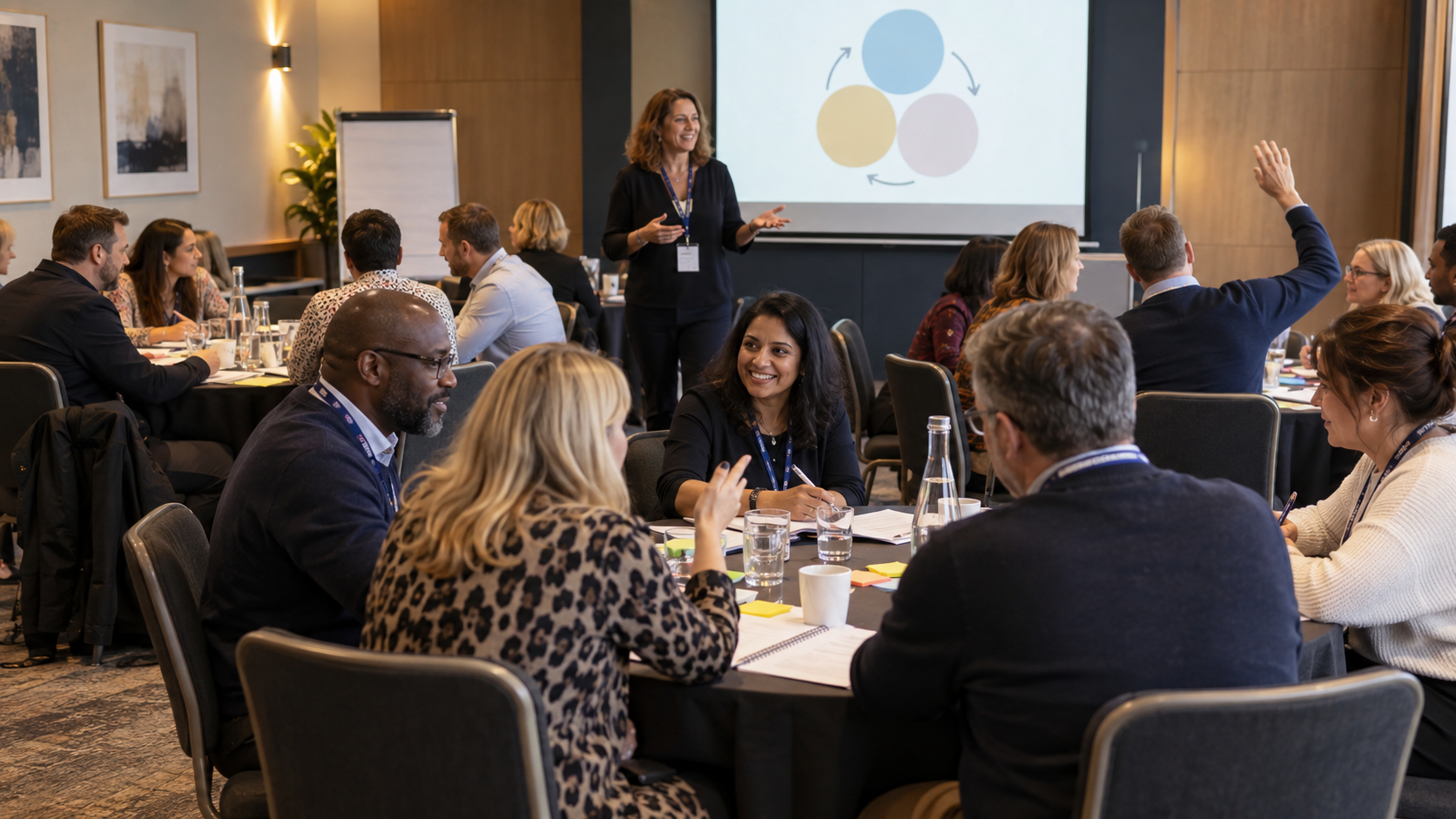
To attract people to a conference, give a specific audience a clear reason to attend, make the benefit easy to understand and repeat that message through trusted channels. Use speakers, partners, email, LinkedIn, event listings and useful pre-event content to build confidence. Then make registration simple and keep showing people why the day is worth their time.
This is for event managers, marketing teams, associations, charities, universities and businesses promoting a conference in Newcastle, Gateshead, Sunderland, Durham or the wider North East.
What makes people decide to attend a conference?
People rarely register because a conference exists. They register because they can see what will be different for them afterwards.
Before you promote anything, write one sentence that answers:
After attending this conference, delegates will be able to…
The ending might be “make a better decision”, “leave with a practical plan” or “meet people they could not easily reach elsewhere”.
That sentence is more useful than “a day of inspiring speakers and networking”. It gives your speakers, partners and marketing team something specific to repeat.
Start with the audience rather than the channel. A conference for North East manufacturers, charity leaders, university researchers and early-stage founders will need different examples, language and proof. If the event is meant for everyone, the promotion usually feels relevant to nobody.
How should you describe the conference so people want to come?
Lead with the problem, outcome or conversation—not the room, the catering or a list of session titles.
Compare these two messages:
Weak: Join us for the 2026 North East Business Conference, featuring expert speakers, networking and refreshments.
Stronger: Spend one focused day with North East business leaders working out how to turn practical AI experiments into useful changes in their teams. Leave with three actions, new contacts and a clearer view of what to try next.
The second version gives a potential delegate a reason to imagine themselves in the room. It also gives a speaker or partner a message they can share without rewriting your whole campaign.
Your event page and promotional posts should make five things obvious:
- Who is this for?
- What problem or opportunity will it address?
- What will someone be able to do, understand or start afterwards?
- Who will they meet or hear from?
- What do they need to know before registering?
The practical details matter too: date, location, timings, ticket price, accessibility, travel, food, cancellation terms and the registration deadline.
How can speakers and partners help fill the room?
Do not wait until the final week and ask every speaker to “share the event”. Give them a small, ready-to-use campaign pack:
- a two-sentence description and personal invitation
- their session title and the problem it will address
- one or two useful images or a short vertical clip
- the registration link and suggested dates for an announcement and reminder
Ask each speaker to explain why the conversation matters to their audience. A generic poster says the event is happening. A short video or post from the speaker saying, “I am joining this discussion because…” gives people a reason to pay attention.
Partners can do more than place a logo on the event page. Ask them to nominate the people who would genuinely benefit, introduce the event in their newsletter or community, host a short pre-event conversation, or bring a useful question to the room. A partner who understands the audience is more valuable than a partner with a large but unrelated following.
LinkedIn’s official Events guidance confirms that an Event Page can hold the title, date, description, speakers and agenda, while organisers can share updates and attendees can invite connections. It is useful for professional conferences, but the page still needs a clear promise.
Which channels should you use to promote a conference?
Use a small number of channels consistently rather than publishing one announcement everywhere and disappearing. For a North East business conference, I would normally start with:
| Channel | Best use | What to publish |
|---|---|---|
| Email list | Reach people who already know the organiser | Invitation, useful reason to attend, deadline and practical details |
| Speakers | Borrow trusted attention | Personal invitation, session idea and short video |
| Partners and sponsors | Reach adjacent communities | Co-branded post, newsletter item or hosted introduction |
| Professional discovery and conversation | Speaker clips, questions, practical insights and event updates | |
| Event page and search | Give every promotion one reliable destination | Complete details, agenda, proof, access information and registration |
| Paid promotion | Extend a message that already works | Small, targeted tests to a defined audience rather than broad awareness |
Eventbrite’s current event-marketing guidance describes promotion as a combination of channels rather than one tactic doing all the work. For a local event, include professional bodies, chambers, trade groups, universities, specialist newsletters, venue networks and relevant North East communities.
What should you publish before the conference?
Promotion works better when every post is not a sales announcement. Create a short sequence that helps people decide.
| Timing | What to publish |
|---|---|
| Six weeks out | The audience, promise, date, location and first confirmed speakers. Open registration once the essentials are ready. |
| Four weeks out | A useful idea from a speaker, the problem the event will tackle and the questions delegates can explore. |
| Two weeks out | The shape of the day: arrival, breaks, interaction, networking and practical takeaways. |
| One week out | The strongest reason to attend, the final programme and a simple reminder asset for partners and speakers. |
| Final 48 hours | Joining information for registered delegates and one honest final call for people still deciding. |
From years of covering conferences, I have noticed that people respond to evidence of a real room: a speaker explaining an idea, delegates asking questions and useful conversations between sessions. A polished graphic announces a conference; human, specific content helps people picture attending it.
How do you use email without damaging trust?
Email is useful because it gives you a direct route to people who have already shown interest. Segment it where possible: past attendees, members, sponsors, speakers, local businesses and people who started registration but did not finish may need different messages.
Keep each email focused on one action. A useful sequence might be:
- announcement: why the conference exists and who it is for
- proof: speakers, partners, attendee feedback or a useful preview
- decision: what the day includes and why it is worth the time
- practical reminder: location, access, food, timing and what to bring
Treat privacy and permission seriously. The ICO’s current guidance says that organisations must understand the PECR rules for electronic-mail marketing; unsolicited marketing to individual subscribers generally needs consent unless a valid exception applies. It also says people need a clear way to opt out. This article is general guidance, not legal advice, so check the rules that apply to your organisation and audience before using a list.
Do not buy a list and assume it is a shortcut to attendance. A large irrelevant list can reduce trust and produce registrations that do not turn into useful delegates.
How do you know whether promotion is working?
Track the path from attention to attendance, not just likes:
- registrations by source or campaign link
- landing-page visits and completed registration rate
- registrations attributed to speakers, partners and sponsors
- cost per registration for paid promotion
- attendance compared with registrations
If people click but do not register, the problem may be the event page, price, timing, location or unclear promise. If registrations are healthy but attendance is weak, improve reminders and joining information rather than simply increasing reach.
Review the numbers with the event team once a week and ask: which audience understood the promise, which message created action and what uncertainty is still stopping people?
What is the simplest conference promotion plan?
Before publishing the next post, check that you have:
- one defined audience and one clear outcome
- a complete event page with a simple registration action
- confirmed speakers or contributors people can trust
- three partners or communities that can reach the right people
- a six-week sequence of useful messages
- a way to track registrations from each important channel
- a compliant email list and clear opt-out route
- joining information that reduces practical uncertainty
People attend conferences when the value is clear, the invitation feels credible and the practical risk feels low. Make the promise specific, let trusted people explain why it matters and keep helping potential delegates decide.
If you need content that shows the atmosphere and usefulness of the event, DS Media’s conference video production service can support speaker clips, delegate stories and a short event film. The content should have a job in the attendance plan, not just exist because the conference was filmed.
For the wider planning process, use the complete event plan checklist, clarify the event outcome with the guide to event goals and success metrics and work backwards using the conference planning timeline.
Sources and further reading
- Eventbrite: Event marketing strategies
- Eventbrite: Promotion ideas for attracting attendees
- LinkedIn Help: LinkedIn Events overview
- Information Commissioner’s Office: Guidance on direct marketing using electronic mail
Plan your next step
Written by
Darius Setsoafia
Darius is the founder of DS Media — a Newcastle-based video production company specialising in corporate films, conference coverage, and event documentation across the North East and beyond. He has spent over six years working with brands, venues, and organisations to document stories worth sharing.
About Darius →