weddings · 10 February 2025 · 5 min read · Darius Setsoafia
Wedding Videography vs Photography: Do You Need Both?
The honest answer to whether you need a wedding videographer, photographer, or both. Plus how to budget if you want the full package.

The short answer
If budget allows, get both. They capture completely different things.
Photography freezes individual moments. Video captures the movement, the sound, the emotion between those moments — your nan’s laugh during the speeches, the tremble in your voice during the vows, the chaos of the dance floor at midnight.
You’ll look at your photos more often. You’ll cry at your video more often.
What each one gives you
Photography delivers:
- Printed albums and wall prints
- Quick sharing on social media
- Posed family and couple portraits
- Detail shots of decor, flowers, rings
- Images you can frame and display for decades
Videography delivers:
- The ceremony in full — vows, readings, music
- Speeches you can actually hear again
- The atmosphere of the day (music, laughter, movement)
- A cinematic highlight film you’ll rewatch for years
- The voices of people you love, captured in a moment that mattered
The comparison isn’t really “which is better”. It’s “which captures what photography can’t and which captures what video can’t” — and the answer to both is: the other one.
What happens during the ceremony
This is where the difference between photography and videography is most stark, and where couples who skipped videography most often express regret.
A photographer captures frames. Beautiful, well-composed frames. But they can’t capture your partner’s voice breaking slightly at “I do”. They can’t capture the involuntary laugh you shared when the celebrant stumbled over a name. They can’t capture your mum’s reaction in the front row during your vows.
A videographer captures all of this as it happens, in sequence, with audio. The ceremony exists as a complete experience you can watch from start to finish, not just as a series of selected highlights.
Most couples who watch their ceremony film say the same thing: “I didn’t realise how much of it I’d already forgotten.”
Speeches — video wins
Wedding speeches are the argument that most often convinces undecided couples to book a videographer.
Read a transcription of your father’s speech. Now watch a video of it with the room laughing in all the right places, his voice catching on the emotional lines, the look on your face as he said things he’d never said out loud before.
There is no comparison. Speeches exist in a medium — sound, timing, performance, reaction — that photography fundamentally cannot capture.
Portraits — photography wins
The posed couple portraits, the golden hour walk, the bridal party lineup, the detail shots of the rings and the dress — these belong to photography.
A videographer is always moving, always watching, always waiting for the authentic moment. A portrait session requires patience and positioning. The two crafts have different rhythms, and trying to do portrait work with a video camera (or ask a photographer to capture the natural moments between poses) produces inferior results in both cases.
This is actually the strongest argument for booking both: each professional stays in their lane and does what they do best, and you end up with a complete record of the day.
How they work together on the day
A common concern: will having both a photographer and videographer feel crowded or intrusive?
When both teams know each other’s work — which is the case when you book them through the same company — the answer is no. We know how to share space, when to give each other the shot, and how to move around the room without disrupting each other or the guests.
Photographers and videographers have fundamentally different needs. A photographer needs a clean frame for a specific composition. A videographer needs to move and follow the action. These aren’t in conflict — they’re complementary.
The problems happen when two crews who’ve never worked together arrive with no awareness of each other’s requirements. That’s a reason to book both through the same company, not a reason to skip one.
Can you afford both?
Here’s a realistic breakdown for Newcastle-area weddings:
| Budget | Mid-range | |
|---|---|---|
| Photography | £850 – £1,200 | £1,400 – £2,000 |
| Videography | £1,200 – £1,500 | £1,800 – £2,500 |
| Both (combo) | £1,800 – £2,500 | £3,000 – £4,000 |
Booking both from the same company usually saves money — typically 10–15% compared to booking separately — and means the two teams already know how to work together without getting in each other’s shots.
What couples regret more — skipping photography or video?
In our experience: skipping video.
Most couples who didn’t book videography express some regret when they hear friends and family talking about their wedding films. The regret is sharpest around the speeches and the ceremony — the moments you genuinely can’t recreate or compensate for after the fact.
Skipping photography is rarer and usually deliberate. Some couples genuinely prefer not to be posed and photographed, and for them the documentary, unposed approach of videography suits the day better.
But the couples who book both and look back years later? Almost universally glad they did.
If you can only pick one
Choose based on what matters most to you:
-
Pick photography if you value printed keepsakes, family portraits, and having images to frame and display. If your priority is a physical record of the day that lives on your walls and in albums.
-
Pick videography if the ceremony, speeches, and atmosphere are what you want to remember. If the moments between the frames — the sounds, the movement, the emotion in real time — are what you most want to keep.
Neither is wrong. But we’ve never had a couple tell us they regretted booking video.
Questions to ask when comparing packages
What’s the coverage window? Most wedding videography packages cover ceremony through first dance as a minimum. Some include getting ready; some include the whole evening. Know what you’re getting.
What’s the final deliverable? A typical highlight film runs 4–8 minutes. Some packages also include a longer documentary edit (30–60 minutes), individual ceremony recording, or a short social teaser for sharing immediately.
How long until delivery? Wedding video editing is time-intensive. Realistic turnaround for a quality edit is 6–12 weeks. Be wary of companies promising 2-week delivery — that usually means less time was spent in the edit.
Can we choose the music? Some companies use pre-cleared music from their own library. Others work with you to choose music that means something to you specifically. The difference in how the final film feels is significant.
What happens to the raw footage? Most videographers keep raw footage for a period (typically 3–6 months) and then delete it. Ask how long they hold it and whether you can purchase a copy.
Our packages
We offer both wedding videography and wedding photography, with savings when you book together. Our most popular option for Newcastle weddings is the full-day package covering ceremony, portraits, and reception through the first dance.
For couples in Northumberland, Durham, and across the North East — or travelling to our region from further afield — take our quiz to get a personalised quote based on your venue, date, and what you need covered.
Related guides
- How to choose the best wedding videographer in Newcastle — what separates great from average
- What does cinematic wedding videography actually mean? — cut through the buzzwords
- Wedding videography costs in Newcastle — honest pricing at every budget level
- Best Newcastle venues for videography — venue-by-venue filming guide
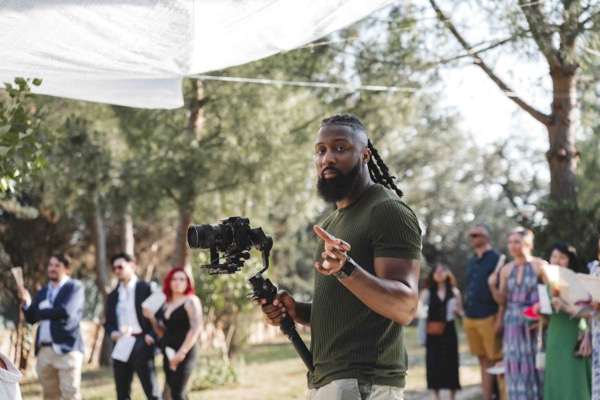
Written by
Darius Setsoafia
Darius is the founder of DS Media — a Newcastle-based video production company specialising in corporate films, conference coverage, and wedding videography across the North East and beyond. He has spent over six years working with brands, venues, and couples to document stories worth keeping.
About Darius →